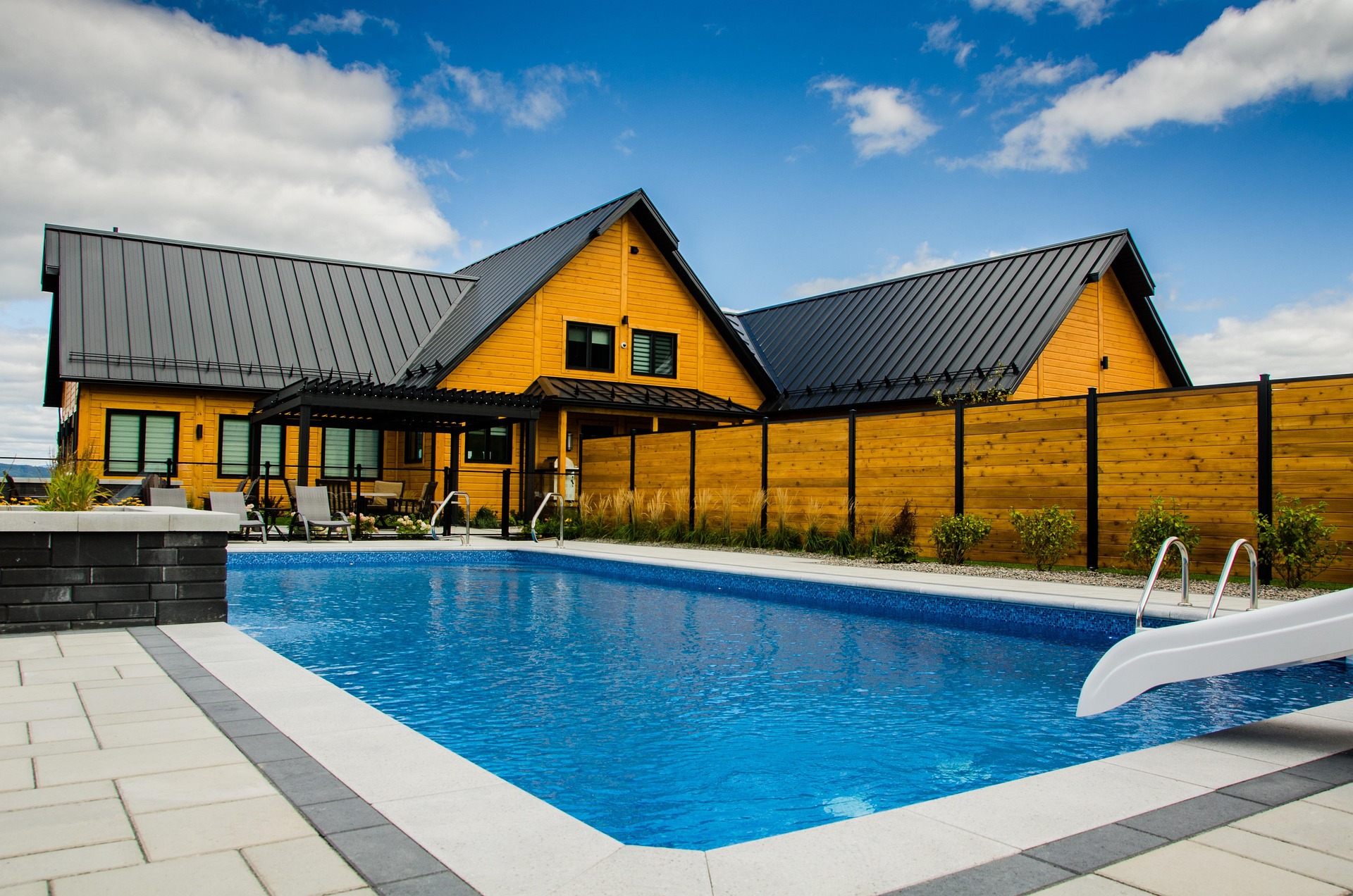
A swimming pool is a standout feature in any home, but to keep it looking great and running smoothly, regular care is essential. This guide breaks down the key steps to maintaining your pool: from weekly cleaning to chemical balancing and seasonal prep.
Weekly Pool Maintenance
Consistent weekly upkeep prevents expensive repairs and keeps the water safe and clear. Choose one day each week and build a routine around it.
Your Weekly Checklist
- Check and top up water levels
- Clean the filter(s)
- Empty skimmer baskets
- Vacuum the pool floor
- Brush pool walls, steps, and ladders
- Sweep the surrounding terrace
- Test pH levels and adjust as needed
- Check chemical supplies and restock when required
Servicing Your Pool Equipment
Your pool’s mechanical systems last longer with scheduled servicing. Heat pumps, boilers, filters, and other components should be inspected annually according to manufacturer guidelines.
If you notice unusual noises, temperature issues, or anything out of the ordinary, call a professional immediately.
Chemical Care & Water Balance
Correct chemical treatment keeps the water safe, protects the pool surface, and reduces algae and bacteria growth. Your installer can recommend the best products based on your pool’s design and water source.
Ideal pH Levels
Aim for a pH between 7.0 and 7.6.
- Below 7.0: Water becomes acidic and can damage pool finishes
- Above 7.8: Scaling may form and chlorine becomes less effective
Chemical Safety Tips
- Store chemicals separately in cool, dry areas
- Always read and follow instructions
- Wear gloves and PPE when handling chemicals
- Never mix chemicals before adding them to the pool
- Rinse empty containers with pool water before disposal
- Keep all chemicals away from children
Shock Treatments
Shock treatments help eliminate chloramines, kill bacteria, and prevent algae growth. Use only products designed for shocking (such as unstabilised dichlor or calcium hypochlorite).
Important:
- Always shock the pool after sunset
- Wait the recommended time before swimming
- Shock more frequently during heavy use or after storms
Testing & Monitoring Water Quality
Test your pool water weekly using strips or liquid testing kits.
For convenience, automatic dosing systems can monitor chemical levels and adjust them automatically. Alternatively, you can have the water professionally balanced on a regular basis.
General Cleaning
Skim debris off the surface whenever you see it, ideally before swimming.
Vacuum the pool regularly. When the pool floor is heavily soiled (often after winter), vacuum to waste to bypass the filter and remove debris more effectively.
Why Pool Covers Matter
A good pool cover keeps debris out, conserves heat, and reduces the workload on your heating system. This not only lowers energy costs but also extends the life of your pool equipment.
Understanding Your Filtration System
Your filter is essential to keeping your water clean. Each type requires different care:
Sand or Glass Filters
- Clean by backwashing every 1–2 weeks
- Perform best when slightly dirty
DE (Diatomaceous Earth) Filters
- Backwash when pressure rises
- Recoat with DE after each backwash
- Deep-clean once per season
Cartridge Filters
- Remove and rinse thoroughly
- Soak cartridges for 12 hours to remove oils
- Keep two sets for rotation to avoid downtime
Preparing Your Pool for Winter
Outdoor pools need special care during colder months.
- Use winter for major repairs
- Never drain the pool without professional advice. Empty pools can shift or crack
- Install a winter cover to block debris and sunlight
- Continue occasional water treatment to prevent algae growth